CRYSVITA® (burosumab-twza) is a fibroblast growth factor 23 (FGF23) blocking antibody indicated for the treatment of FGF23-related hypophosphatemia in tumor-induced osteomalacia (TIO) associated with phosphaturic mesenchymal tumors that cannot be curatively resected or localized in adult and pediatric patients 2 years of age and older.
Adult dosing schedule and administration for CRYSVITA® (burosumab-twza)
How to initiate treatment using the recommended starting dosage for adults with TIO that cannot be curatively resected or localized.
Recommended starting dosage for adult patients1 (18 years of age and older)
The recommended starting dosage is 0.5 mg/kg of body weight, rounded to the nearest 10 mg, administered every 4 weeks. Dose may be increased up to 2 mg/kg, not to exceed 180 mg, administered every 2 weeks.
CRYSVITA
dosed every
weeks1
CRYSVITA is administered by a healthcare professional every 4 weeks.1
Ready-to-use subcutaneous injection that comes in 3 strengths1:
The maximum volume of CRYSVITA per injection is 1.5 mL. If multiple injections are required, administer at different injection sites.1
Injection sites should be rotated with each injection, administered at a different anatomic location than the previous injection. Injection site locations include1:
- Upper arms
- Upper thighs
- Buttocks
- Any quadrant of the abdomen
Do not inject into moles, scars, or areas where the skin is tender, bruised, red, hard, or not intact.1
treatment
Preparing your adult patients for CRYSVITA
Before initiating CRYSVITA1
- Have your patient discontinue oral phosphate and/or active vitamin D analogs (eg, calcitriol, paricalcitol, doxercalciferol, calcifediol) 1 week prior
- Fasting serum phosphorus concentration should be below the reference range for age
- In patients at high risk for hypercalcemia (eg, pre-existing hyperparathyroidism, prolonged immobilization, dehydration, hypervitaminosis D, or renal impairment), assess serum calcium and parathyroid hormone levels
Assessing fasting serum phosphorus during CRYSVITA treatment for adults with TIO
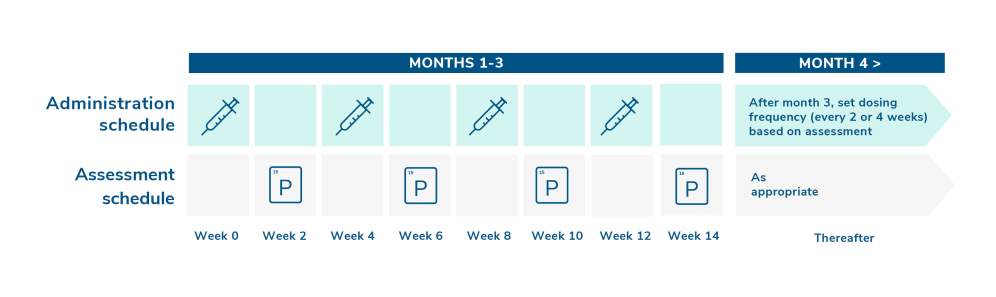
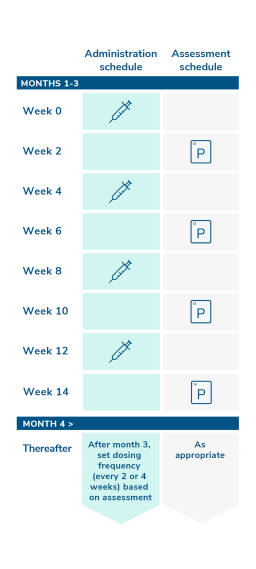
The starting dosage of CRYSVITA is administered every 4 weeks for the first 3 months.1
After initiation of treatment with CRYSVITA, assess fasting serum phosphorus on a monthly basis, measured 2 weeks post-dose, for the first 3 months of treatment, and thereafter as appropriate.1
Monitor and adjust dose based on serum phosphorus levels1
If serum phosphorus is within the normal range, continue with the same dose. If serum phosphorus is not within the normal range, follow the Dose adjustment instructions below.
Guidelines for adult dose adjustments with CRYSVITA
When making dosage adjustments for your patients, take note of the following1:
- Reassess fasting serum phosphorus level 2 weeks after dose adjustment
- Do not adjust CRYSVITA more frequently than every 4 weeks
If serum phosphorus is below the normal range1:
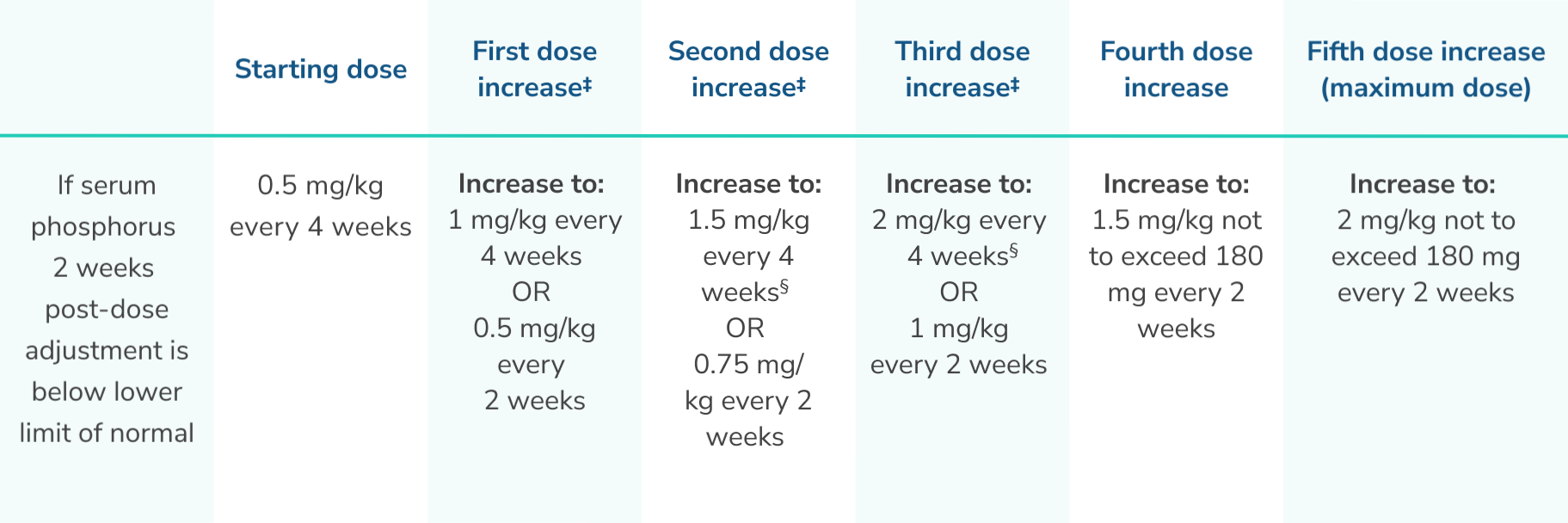
- The dose should be titrated according to the table below up to the maximum dose of 2 mg/kg, not to exceed 180 mg, administered every 2 weeks
- For those individuals not reaching a fasting serum phosphorus greater than the lower limit of the normal range, consider dividing total dose administered every 4 weeks and administering every 2 weeks
TIO dose schedule* for stepwise† dose increase for adults1
1 mg/kg every 4 weeks OR 0.5 mg/kg every 2 weeks
Increase to: 1.5 mg/kg every 4 weeks§ OR 0.75 mg/kg every 2 weeks
2 mg/kg every 4 weeks§ OR 1 mg/kg every 2 weeks
1.5 mg/kg not to exceed 180 mg every 2 weeks
2 mg/kg not to exceed 180 mg every 2 weeks
- *Rounded to the nearest 10 mg.
- †Do not adjust CRYSVITA more frequently than every 4 weeks.1
- ‡For those individuals not reaching a fasting serum phosphorus greater than the lower limit of the normal range, physicians may consider dividing total dose administered every 4 weeks and administering every 2 weeks.1
- §In patients with high body weight, if the calculated dose is greater than 180 mg every 4 weeks, move to a divided dose every 2 weeks.1
Have questions about biochemical reference ranges?
Your CRYSVITA representative can provide resources on biochemical markers in TIO, including serum phosphorus.
Contact a repIf fasting serum phosphorus is above the normal range1:
- Withhold the next dose and reassess the serum phosphorus level in 4 weeks
- The patient must have fasting serum phosphorus below the reference range to reinitiate CRYSVITA
- Once serum phosphorus is below the reference range, treatment may be restarted at approximately half the initial starting dose, up to a maximum dose of 180 mg administered every 2 weeks for adults
- After a dose decrease, reassess serum phosphorus level 2 weeks after the dose adjustment
- If the level remains below the reference range for age after the reinitiation dose, the dose can be adjusted per the table in the “Increasing CRYSVITA dosing” section above
Have questions about biochemical reference ranges?
Check with the testing laboratory for specific definitions, parameters, and normal ranges. Your CRYSVITA representative can also provide resources on biochemical markers in TIO, including serum phosphorus.
Contact a repIf a patient undergoes treatment of the underlying tumor (ie, surgical excision or radiation therapy)1:
- CRYSVITA treatment should be interrupted and fasting serum phosphorus reassessed after treatment has been completed
- CRYSVITA dose should be restarted at the patient’s initiation dose if fasting serum phosphorus remains below the lower limit of normal
- Follow dose adjustment per the table in the “Increasing CRYSVITA dosing” section above to maintain fasting serum phosphorus within the reference range for age
Age-specific reference ranges for normal serum phosphorus levels
| Laboratory test | Reference ranges in children1-3 | Reference ranges in adults*3 |
|---|---|---|
| Fasting serum phosphorus | 0 to 14 d: 5.6-10.5 mg/dL 15 d to <1 y: 4.8-8.4 mg/dL 1 to <5 y: 4.3-6.8 mg/dL 5 to <13 y: 4.1-5.9 mg/dL 13 to <16 y: 3.2-6.2 mg/dL† 16 to <19 y: 2.9-5.0 mg/dL |
2.5-4.5 mg/dL |
15 d to <1 y: 4.8-8.4 mg/dL
1 to <5 y: 4.3-6.8 mg/dL
5 to <13 y: 4.1-5.9 mg/dL
13 to <16 y: 3.2-6.2 mg/dL†
16 to <19 y: 2.9-5.0 mg/dL
*Reference ranges may vary based on assay and instrument used. It is important to use the reference range provided by the laboratory conducting the test to ensure accuracy.
† Combined reference range for males and females.
References:
- 1. Dahir K, et al. X-linked hypophosphatemia: a new era in management. J Endocr Soc. 2020;4(12):bvaa151. 2. Colantonio DA, et al. Closing the gaps in pediatric laboratory reference intervals: a CALIPER database of 40 biochemical markers in a healthy and multiethnic population of children. Clin Chem. 2012;58(5):854-868. 3. Dahir K, et al. Diagnosis and Management of Tumor-induced Osteomalacia: Perspectives From Clinical Experience. J Endocr Soc. 2021;5(9):bvab099.
Additional considerations for dosage and administration of CRYSVITA
When treating your patients with CRYSVITA, consider the following1:
- CRYSVITA should be administered via subcutaneous injection only
- Visually inspect CRYSVITA for particulate matter and discoloration prior to administration. Do not use if the solution is discolored or cloudy or if the solution contains any particles or foreign particulate matter
- If a patient misses a dose, have the patient resume CRYSVITA as soon as possible at the prescribed dose. To avoid missed doses, treatments may be administered 3 days on either side of the scheduled treatment date
- Monitor serum calcium and parathyroid hormone levels in patients at high risk for hypercalcemia before and during treatment
Connect with Kyowa Kirin Cares to help your adult patients prescribed CRYSVITA with their treatment journey
Actor portrayal