This website is intended for use by US residents only.

Two phase 2 studies showed that CRYSVITA® (burosumab-twza)1-3:

  • Increased and maintained serum phosphorus levels
  • Helped heal osteomalacia

CRYSVITA was tested in a clinical trial program of 27 adults with TIO that could not
be curatively resected or localized1

Study designs

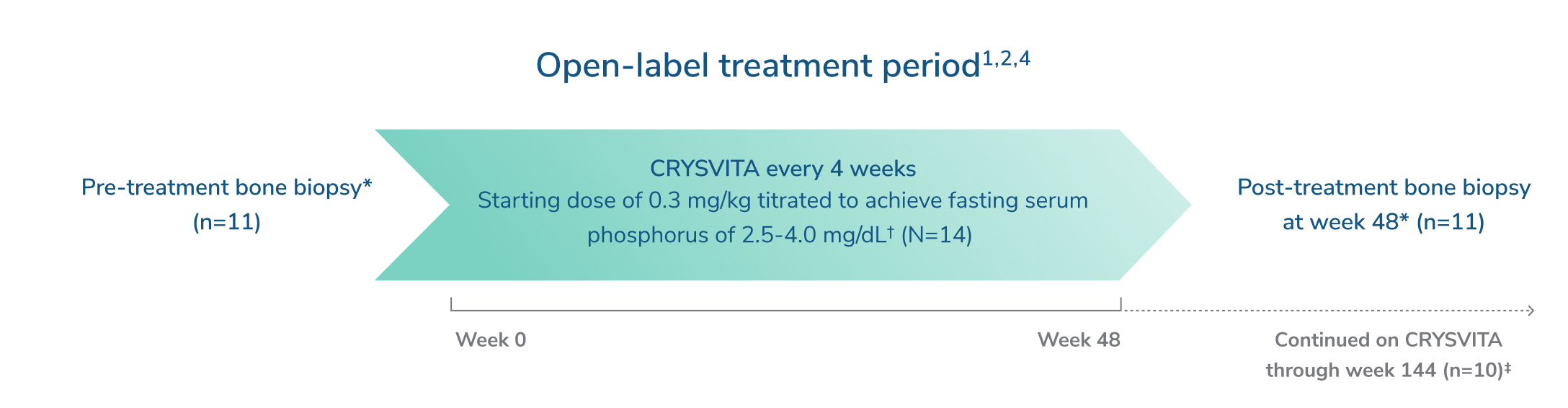
CRYSVITA was studied in a 144-week, single-arm, open-label, phase 2 study in 14 adult patients with a confirmed diagnosis of FGF23-related hypophosphatemia produced by an underlying tumor that was not amenable to surgical excision or could not be located aged 33-68 years (median 59.5 years).

Patients received CRYSVITA every 4 weeks at a weight-based starting dose of 0.3 mg/kg that was titrated to achieve a fasting serum phosphorus level of 2.5 to 4.0 mg/dL. The mean dose was 0.83 mg/kg at week 20, 0.87 mg/kg at week 48, 0.77 mg/kg at week 96, and 0.71 mg/kg at week 144.1,2

*TIO biopsy analysis included patients with TIO who received ≥1 dose of CRYSVITA during the study and who had paired bone biopsies at baseline and week 48 (n=11); 3 of 14 patients were excluded because their bone biopsy data were missing at baseline or not evaluable at week 48.2,4

†Patients received CRYSVITA every 4 weeks at a weight-based starting dose of 0.3 mg/kg that was titrated through week 16, and beyond if needed, to a maximum of 2.0 mg/kg.2

One patient had not completed the week 144 visit as of the data cutoff date (January 11, 2019).4,5

Coprimary endpoints2,4

  • Proportion of patients achieving mean serum phosphorus levels above the lower limit of normal at the midpoint of the dosing interval, averaged across dose cycles from baseline to week 24
  • Change from baseline to week 48 of osteomalacia-
    associated bone measurements, including:
    • Osteoid thickness (O.Th)
    • Osteoid volume to bone volume (OV/BV)
    • Mineralization lag time (MLt)

Select secondary endpoint2,4

  • Mean change from baseline to week 24 in serum phosphorus levels at the midpoint of the dosing intervals, averaged across dose cycles

Safety endpoint2,4

  • Number and percentage of patients with adverse events (AEs) and serious adverse events (SAEs)

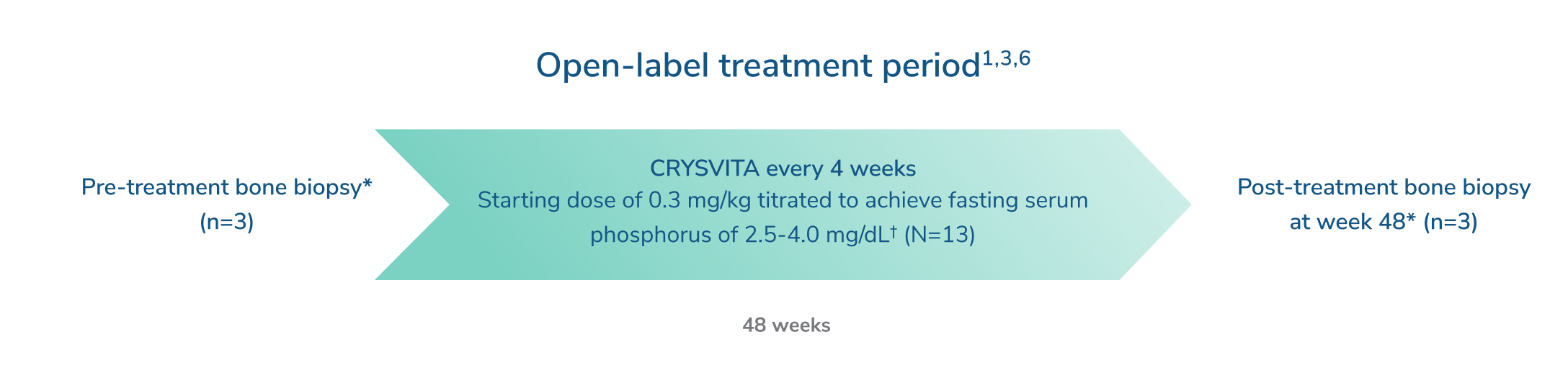
CRYSVITA was studied in a single-arm, open-label, phase 2 study of 13 adult patients with a confirmed diagnosis of TIO aged 41-73 years (median 58.0 years). Patients received CRYSVITA every 4 weeks at a weight-based starting dose of 0.3 mg/kg that was titrated to achieve a fasting serum phosphorus level of 2.5 to 4.0 mg/dL. The mean (SD) dose was 0.91 (0.59) mg/kg at week 48 and 0.96 (0.70) mg/kg at week 88.1,3

No patients discontinued the study due to treatment-emergent adverse events (TEAEs).3

*Bone biopsy was voluntary and only obtained in 3 of 13 patients.6

†Patients received CRYSVITA every 4 weeks at a weight-based starting dose of 0.3 mg/kg that was titrated in dose increments of 0.2 mg/kg, to a maximum dose of 2.0 mg/kg.1,3

Primary endpoint3

  • Serum phosphorus level at each timepoint

Select secondary endpoint3

  • Percent change from baseline to week 48 in bone histomorphometric parameters, including: 
    • Osteoid thickness (O.Th)
    • Osteoid volume to bone volume (OV/BV)
    • Mineralization lag time (MLt)

Safety endpoint3

  • Number and percentage of patients with adverse events (AEs)

In both studies of adult patients with TIO, oral phosphate and active vitamin D analogs were discontinued 2 weeks prior to study enrollment and were not allowed in the study.1

At baseline, patients with TIO experienced substantial disease burden

In Study 6:

  • 90% (9/10) of patients with known tumor location underwent attempted surgical resection4
  • 45% (5/11) of patients required assistance with walking long distances4
  • Mean time between first symptoms and TIO diagnosis was 4.2 ± 4.1 years (range 0.1-13.2 years)7

In Study 7:

  • 54% (7/13) of patients had previously undergone surgery for their disease3
  • The average duration of disease was 10 years3

Patient demographics and disease characteristics at baseline1-4,6

Study 6 (N=14, aged 33-68 years) Study 7 (N=13, aged 41-73 years)
Median age (years) 59.5 58
Male, n (%) 8 (57%) 6 (46%)
Mean serum phosphorus (mg/dL) (SD) 1.60 (0.47) 1.62 (0.49)
Prior therapy, oral phosphate (%) 93% 92%
Prior therapy, active vitamin D (%) 100% 100%
Median age (years)
59.5
Male, n (%)
8 (57%)
Mean serum phosphorus (mg/dL) (SD)
1.60 (0.47)
Prior therapy, oral phosphate (%)
93%
Prior therapy, active vitamin D (%)
100%
Median age (years)
58
Male, n (%)
6 (46%)
Mean serum phosphorus (mg/dL) (SD)
1.62 (0.49)
Prior therapy, oral phosphate (%)
92%
Prior therapy, active vitamin D (%)
100%

Among patients with paired bone biopsies, 9 of 11 patients in Study 6 and 3 of 3 patients in Study 7 had osteomalacia at baseline based on bone histomorphometric assessments.1

Studies 6 & 7: Change in serum phosphorus

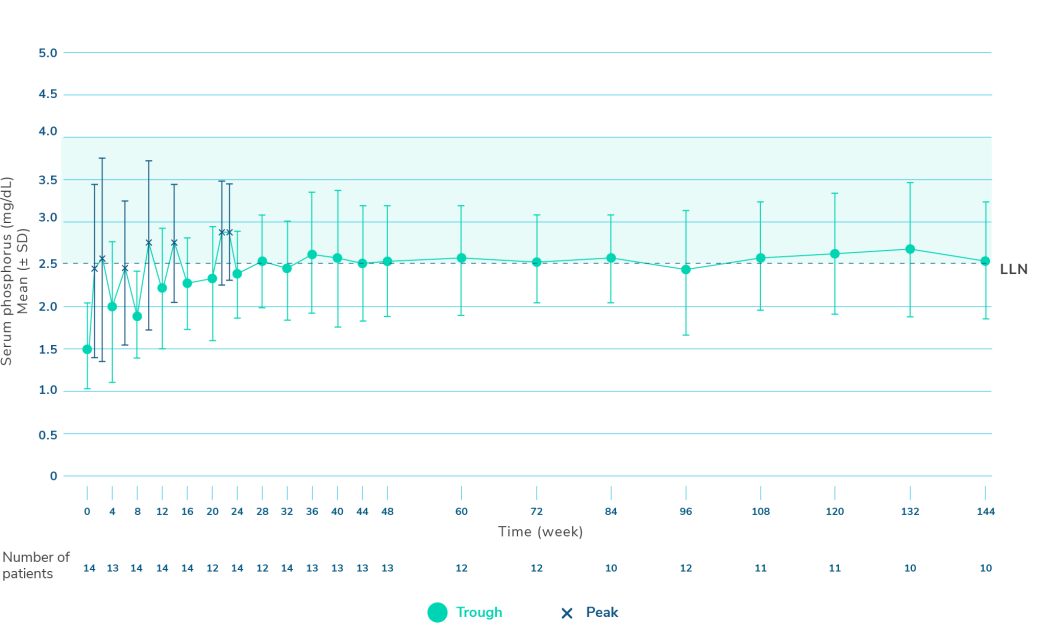
CRYSVITA increased and sustained mean serum phosphorus levels near or above the lower limit of normal (LLN)1

STUDY 6

Mean serum phosphorus levels in adults receiving CRYSVITA every 4 weeks1*

Line graph of mean serum phosphorus levels in adults receiving CRYSVITA every 4 weeks from baseline through Week 144, with values shown relative to the lower limit of normal

Line graph showing mean serum phosphorus levels within the normal range in patients with TIO receiving CRYSVITA every 4 weeks.

In Study 6, across midpoints of dose intervals through week 241,2:

  • 50% (n=7/14) of patients achieved a mean serum phosphorus level above the LLN
  • Increase in mean (SD) serum phosphorus levels from 1.60 (0.47) mg/dL at baseline to 2.64 (0.76) mg/dL

In Study 7, across midpoints of dose intervals through week 241,3:

  • 69% (n=9/13) of patients achieved mean serum phosphorus levels above the LLN
  • Primary endpoint: Increase in mean (SD) serum phosphorus levels from 1.62 (0.49) mg/dL at baseline to 2.63 (0.87) mg/dL

*Mean serum phosphorus levels (mg/dL). The dotted horizontal line represents the LLN (2.5 mg/dL). Note that the normal levels of serum phosphorus vary by age and sex, and ranges may vary by testing laboratory. At baseline, mean (SD) serum phosphorus levels were 1.60 (0.47) mg/dL. Mean (SD) serum phosphorus levels across midpoints of dose intervals (2 weeks post-dose) through week 24 were 2.64 (0.76) mg/dL with CRYSVITA.1,2,4,8

Studies 6 & 7: Change in osteomalacia healing

CRYSVITA helped heal osteomalacia1

STUDY 6

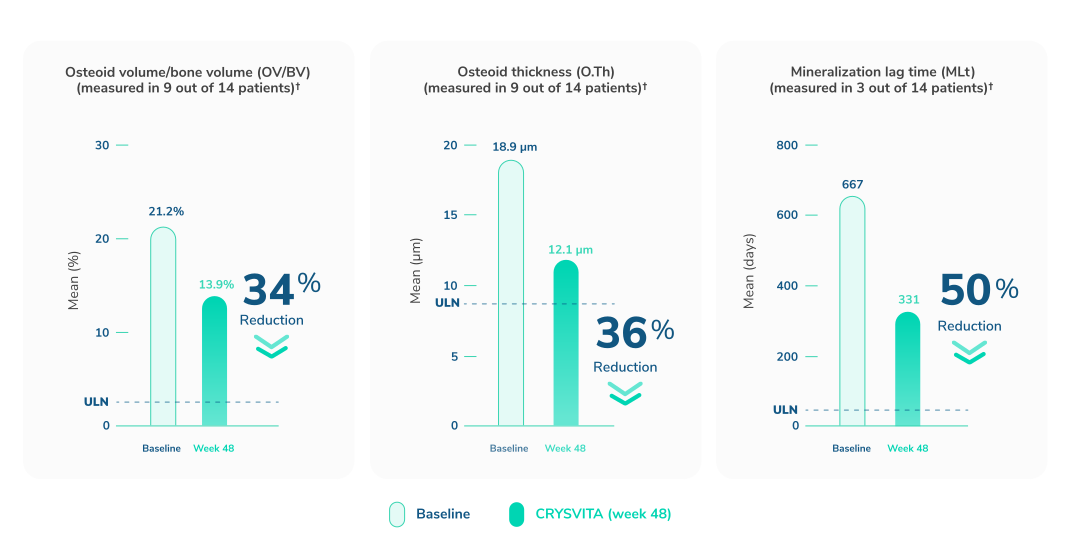
Improved bone mineralization with CRYSVITA every 4 weeks, as assessed by bone histomorphometry1,2

Osteoid volume to bone volume decreased from 21.2% at baseline to 13.9% at Week 48, a 34% reduction, Osteoid thickness decreased from 18.9 micrometers at baseline to 12.1 micrometers at Week 48, a 36% reduction, Mineralization lag time decreased from 667 days at baseline to 331 days at Week 48, a 50% reduction

Three bar graphs showing bone mineralization as assessed by histomophometry.

  • One showing a 34% reduction in OV/BV in 9 out of 14 patients
  • One showing a 36% reduction in O.Th in 9 out of 14 patients
  • One showing a 50% reduction in MLt in 3 out of 14 patients

†The ULNs were defined as 3.05% for osteoid volume to bone volume (OV/BV), 8.9 μm for osteoid thickness (O.Th), and mineralization lag time (MLt) as 28.6 days.

ULN=upper limit of normal. 

In Study 6 (N=14, aged 33-68 years), histological and histomorphometric assessments of iliac bone crest (biopsies) were examined for osteomalacia healing.1

CRYSVITA improved healing at week 48, with reductions in1

  • OV/BV
  • O.Th
  • MLt

In the 9 patients who presented with osteomalacia1

  • Mean (SD) score decreased in OV/BV from 21.2% (19.9) at baseline to 13.9% (16.7) at week 48, a 34% reduction
  • O.Th declined from a mean (SD) of 18.9 (11.9) µm to 12.1 (10.1) µm, a 36% reduction
  • MLt declined in 3 patients from a mean (SD) of 667 (414) days to 331 (396) days, a reduction of 50%
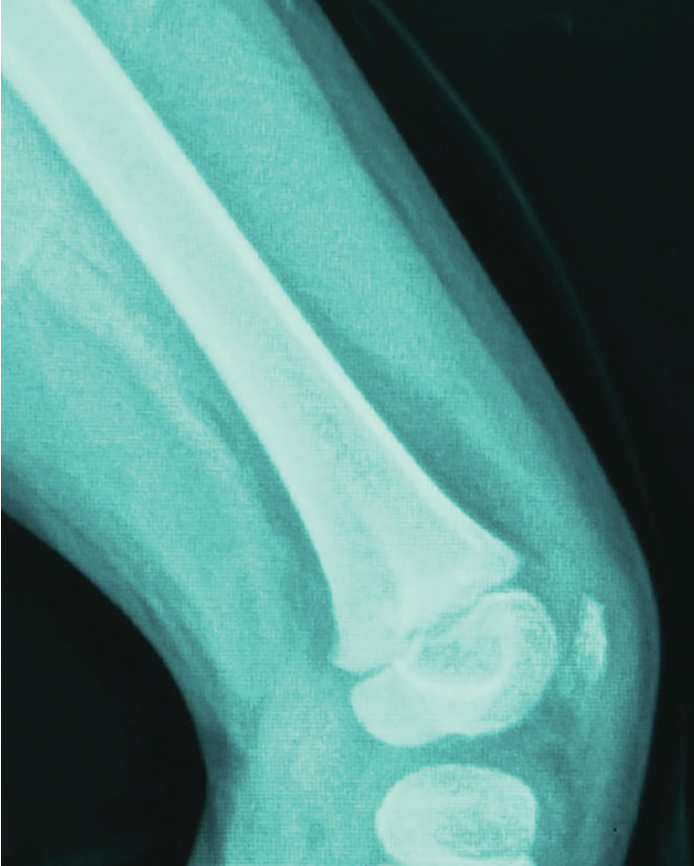
An x-ray image of a knee joint

In Study 6, CRYSVITA helped heal bone abnormalities as demonstrated by 99mtechnetium-labelled whole body bone scans1

Radiographic evaluation of osteomalacia

CRYSVITA decreased areas of tracer uptake on bone scans from week 48 through week 144, suggesting healing of bone abnormalities.1

  • 99mtechnetium-labelled whole-body scans use a radioactive tracer to assess bone abnormalities. In patients with TIO, increased tracer uptake on bone scans is presumed to be nontraumatic fractures and pseudofractures1,9
  • Scans were performed at baseline and subsequent timepoints during the study on all 14 patients. At baseline, 99mtechnetium-labelled bone scans detected 249 bone abnormalities across all patients1,2

Study 7 | Secondary endpoint

Study 7 also showed improvements in bone mineralization in patients treated with CRYSVITA.1

At week 48 in 3 patients with paired bone biopsies, CRYSVITA healed osteomalacia, as demonstrated by bone histomorphometric assessments of osteomalacia, with a 34% reduction in OV/BV and a 16% reduction in O.Th.

Safety

STUDIES 6 AND 7 SAFETY ENDPOINT

Clinical safety profile of CRYSVITA in adult patients with TIO1

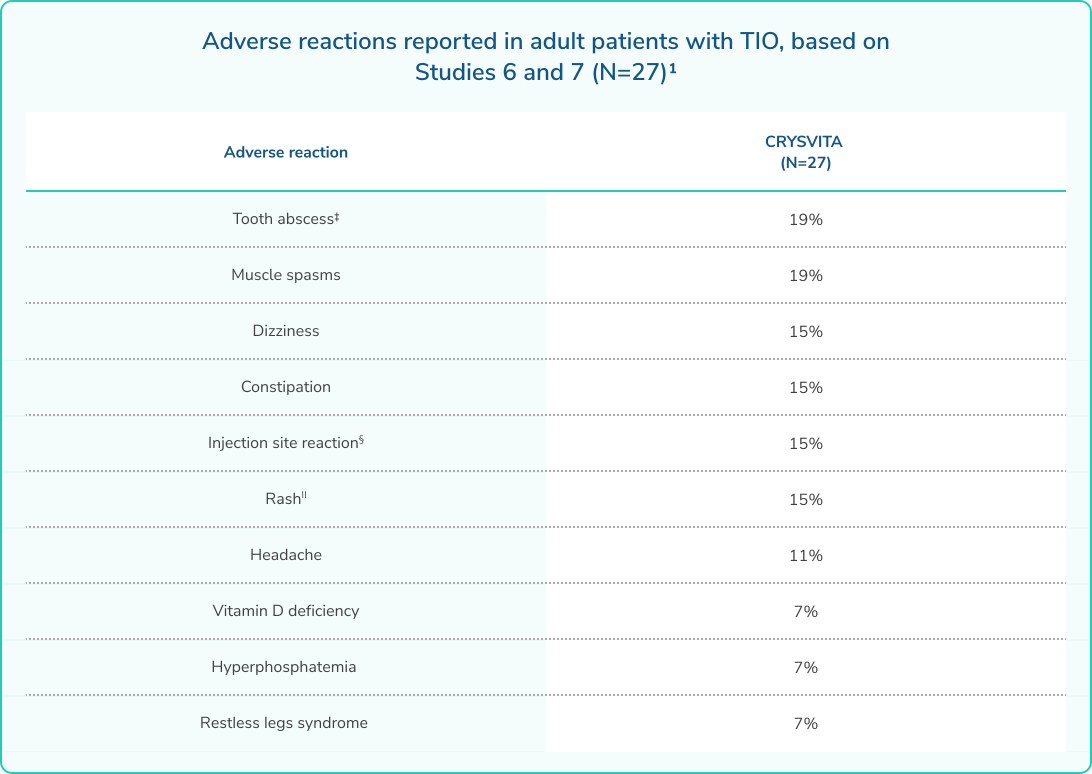
Adverse reactions reported in adult patients with TIO, based on Studies 6 and 7 (N=27)1

Adverse reaction
CRYSVITA (N=27)
19%
CRYSVITA (N=27)
19%
CRYSVITA (N=27)
15%
CRYSVITA (N=27)
15%
CRYSVITA (N=27)
15%
CRYSVITA (N=27)
15%
CRYSVITA (N=27)
11%
CRYSVITA (N=27)
7%
CRYSVITA (N=27)
7%
CRYSVITA (N=27)
7%

Tooth abscess includes tooth abscess and toothache. 
§Injection site reaction includes injection site reaction, injection site pain, and injection site swelling. 
IIRash includes rash and rash papular. 

The safety of CRYSVITA in patients with TIO was demonstrated in 2 single-arm clinical studies (Studies 6 and 7) that enrolled a total of 27 patients. Fourteen patients were male, and patients ranged from 33-73 years of age. The mean dose of CRYSVITA was 0.77 mg/kg every 4 weeks and the mean duration of exposure was 121 weeks.1

Adverse reactions

Hypersensitivity reactions1

In the phase 2 studies, 22% of patients experienced a hypersensitivity reaction, which were mild or moderate in severity. The most frequent hypersensitivity reactions were eczema (11%) and rash (11%).

Hyperphosphatemia1

In the phase 2 studies, 7% of patients experienced hyperphosphatemia, which was managed with dose reduction.

Injection site reaction1

The frequency of injection site reactions was 15% (injection site reaction, injection site pain, and injection site swelling). Injection site reactions were generally mild in severity, required no treatment, and resolved in all cases.

Restless legs syndrome1

In the phase 2 studies, 7% (2/27) of patients experienced symptoms of restless legs syndrome, which were mild and did not require treatment interruption.

Want to learn more about starting your patients on CRYSVITA?

Gilberto, a patient currently on CRYSVITA, smiling while standing with his hand in his pocket

Gilberto,
currently on
CRYSVITA

Indication

CRYSVITA® (burosumab-twza) is a fibroblast growth factor 23 (FGF23) blocking antibody indicated for the treatment of FGF23-related hypophosphatemia in tumor-induced osteomalacia (TIO) associated with phosphaturic mesenchymal tumors that cannot be curatively resected or localized in adult and pediatric patients 2 years of age and older.


Indication

CRYSVITA® (burosumab-twza) is a fibroblast growth factor 23 (FGF23) blocking antibody indicated for the treatment of FGF23-related hypophosphatemia in tumor-induced osteomalacia (TIO) associated with phosphaturic mesenchymal tumors that cannot be curatively resected or localized in adult and pediatric patients 2 years of age and older.

Important Safety Information

CONTRAINDICATIONS

CRYSVITA is contraindicated:

  • In concomitant use with oral phosphate and/or active vitamin D analogs (e.g., calcitriol, paricalcitol, doxercalciferol, calcifediol) due to the risk of hyperphosphatemia.
  • When serum phosphorus is within or above the normal range for age.
  • In patients with severe renal impairment or end stage renal disease because these conditions are associated with abnormal mineral metabolism.

WARNINGS AND PRECAUTIONS

Hypersensitivity

  • Hypersensitivity reactions (e.g., rash, urticaria) have been reported in patients with CRYSVITA. Discontinue CRYSVITA if serious hypersensitivity reactions occur and initiate appropriate medical treatment.

Hyperphosphatemia and Risk of Nephrocalcinosis

  • Increases in serum phosphorus to above the upper limit of normal may be associated with an increased risk of nephrocalcinosis. For patients already taking CRYSVITA, dose interruption and/or dose reduction may be required based on a patient’s serum phosphorus levels.
  • Patients who undergo treatment of the underlying tumor should have dosing interrupted and adjusted to prevent hyperphosphatemia.

Hypercalcemia

  • Increases in serum calcium have been reported in patients treated with CRYSVITA. Patients with risk factors such as pre-existing hyperparathyroidism, prolonged immobilization, dehydration, hypervitaminosis D, or renal impairment, are at higher risk of hypercalcemia. Monitor these patients for serum calcium and parathyroid hormone levels before and during CRYSVITA treatment for moderate to severe hypercalcemia. In patients with moderate to severe hypercalcemia, CRYSVITA should not be administered until hypercalcemia is adequately managed.

Injection Site Reactions

  • Administration of CRYSVITA may result in local injection site reactions. Discontinue CRYSVITA if severe injection site reactions occur and administer appropriate medical treatment.

ADVERSE REACTIONS

Adult Patients

  • Adverse reactions reported in more than 10% of CRYSVITA-treated adult TIO patients in two studies are: tooth abscess (19%), muscle spasms (19%), dizziness (15%), constipation (15%), injection site reaction (15%), rash (15%), and headache (11%).

USE IN SPECIFIC POPULATIONS

  • There are no available data on CRYSVITA use in pregnant women to inform a drug-associated risk of adverse developmental outcomes. Serum phosphorus levels should be monitored throughout pregnancy. Report pregnancies to the Kyowa Kirin, Inc. Adverse Event reporting line at 1-844-768-3544.
  • There is no information regarding the presence of CRYSVITA in human milk or the effects of CRYSVITA on milk production or the breastfed infant. Therefore, the developmental and health benefits of breastfeeding should be considered along with the mother’s clinical need for CRYSVITA and any potential adverse effects on the breastfed infant from CRYSVITA or from the underlying maternal condition.

PATIENT COUNSELING INFORMATION

  • Advise patients not to use any oral phosphate and/or active vitamin D analog products.
  • Instruct patients to contact their physician if hypersensitivity reactions, injection site reactions, and restless legs syndrome induction or worsening of symptoms occur.

You may report side effects to the FDA at (800) FDA-1088 or www.fda.gov/
medwatch
. You may also report side effects to Kyowa Kirin, Inc. at 1-844-768-3544.

For important risk and use information, please see the full Prescribing Information for CRYSVITA.

References:

  • 1. CRYSVITA (burosumab-twza). US Prescribing Information. Kyowa Kirin, Inc.; April 2026. 2. Jan de Beur SM, Miller PD, Weber TJ, et al. Burosumab for the treatment of tumor-induced osteomalacia. J Bone Miner Res. 2021;36(4):627-635. doi:10.1002/jbmr.4233 3. Imanishi Y, Ito N, Rhee Y, et al. Interim analysis of a phase 2 open-label trial assessing burosumab efficacy and safety in patients with tumor-induced osteomalacia. J Bone Miner Res. 2021;36(2):262-270. doi:10.1002/jbmr.4184 4. Data on file. UX023T-CL201 CSR. Ultragenyx Pharmaceutical Inc.; 2019. 5. Jan de Beur SM, Miller PD, Weber TJ, et al. Burosumab for the treatment of tumor-induced osteomalacia. J Bone Miner Res. 2021;36(4)(suppl):1-8. doi:10.1002/jbmr.4233 6. Data on file. KRN 230-02 CSR. Ultragenyx Pharmaceutical Inc.; 2018. 7. Jan de Beur SM, Carpenter TO, Dahir K, et al. Healthcare resource utilization associated with tumor-induced osteomalacia: review of patient histories prior to entry in clinical trial UX023T-CL201. Abstract OC35. Aging Clin Exp Res. 2023;35:S37-S613. doi:10.1007/s40520-023-02442-7 8. Koek WNH, Campos-Obando N, van der Eerden BCJ, et al. Age-dependent sex differences in calcium and phosphate homeostasis. Endocr Connect. 2021;10(3):273-282. doi:10.1530/EC-20-0509 9. Kane SM, Davis DD. Technetium-99m. In: StatPearls. Treasure Island (FL): StatPearls Publishing; September 19, 2022. 10. Kenkre JS, Bassett J. The bone remodelling cycle. Ann Clin Biochem. 2018;55(3):308-327. doi:10.1177/0004563218759371 11. Bhan A, Qiu S, Rao SD. Bone histomorphometry in the evaluation of osteomalacia. Bone Rep. 2018;8:125-134. doi:10.1016/j.bonr.2018.03.005 12. Dahir K, Roberts MS, Krolczyk S, Simmons JH. X-linked hypophosphatemia: a new era in management. J Endocr Soc. 2020;4(12):bvaa151. doi:10.1210/jendso/bvaa151 13. Osteoid. Science Direct. Accessed February 11, 2026. www.sciencedirect.com/topics/biochemistry-genetics-and-molecular-biology/osteoid 14. Insogna KL, Rauch F, Kamenický P, et al. Burosumab improved histomorphometric measures of osteomalacia in adults with X-linked hypophosphatemia: a phase 3, single-arm, international trial. J Bone Miner Res. 2019;34(12):2183-2191. doi:10.1002/jbmr.3843 15. Cohen A, Drake MT. Clinical manifestations, diagnosis, and treatment of osteomalacia. UpToDate. Updated November 19, 2021. Accessed February 11, 2026. https://www.uptodate.com/contents/clinical-manifestations-diagnosis-and-treatment-of-osteomalacia
Indication

CRYSVITA® (burosumab-twza) is a fibroblast growth factor 23 (FGF23) blocking antibody indicated for the treatment of FGF23-related hypophosphatemia in tumor-induced osteomalacia (TIO) associated with phosphaturic mesenchymal tumors that cannot be curatively resected or localized in adult and pediatric patients 2 years of age and older.

Important Safety Information

CONTRAINDICATIONS

CRYSVITA is contraindicated:

  • In concomitant use with oral phosphate and/or active vitamin D analogs (e.g., calcitriol, paricalcitol, doxercalciferol, calcifediol) due to the risk of hyperphosphatemia.
  • When serum phosphorus is within or above the normal range for age.
  • In patients with severe renal impairment or end stage renal disease because these conditions are associated with abnormal mineral metabolism.

WARNINGS AND PRECAUTIONS

Hypersensitivity

  • Hypersensitivity reactions (e.g., rash, urticaria) have been reported in patients with CRYSVITA. Discontinue CRYSVITA if serious hypersensitivity reactions occur and initiate appropriate medical treatment.

Hyperphosphatemia and Risk of Nephrocalcinosis

  • Increases in serum phosphorus to above the upper limit of normal may be associated with an increased risk of nephrocalcinosis. For patients already taking CRYSVITA, dose interruption and/or dose reduction may be required based on a patient’s serum phosphorus levels.
  • Patients who undergo treatment of the underlying tumor should have dosing interrupted and adjusted to prevent hyperphosphatemia.

Hypercalcemia

  • Increases in serum calcium have been reported in patients treated with CRYSVITA. Patients with risk factors such as pre-existing hyperparathyroidism, prolonged immobilization, dehydration, hypervitaminosis D, or renal impairment, are at higher risk of hypercalcemia. Monitor these patients for serum calcium and parathyroid hormone levels before and during CRYSVITA treatment for moderate to severe hypercalcemia. In patients with moderate to severe hypercalcemia, CRYSVITA should not be administered until hypercalcemia is adequately managed.

Injection Site Reactions

  • Administration of CRYSVITA may result in local injection site reactions. Discontinue CRYSVITA if severe injection site reactions occur and administer appropriate medical treatment.

ADVERSE REACTIONS

Adult Patients

  • Adverse reactions reported in more than 10% of CRYSVITA-treated adult TIO patients in two studies are: tooth abscess (19%), muscle spasms (19%), dizziness (15%), constipation (15%), injection site reaction (15%), rash (15%), and headache (11%).

USE IN SPECIFIC POPULATIONS

  • There are no available data on CRYSVITA use in pregnant women to inform a drug-associated risk of adverse developmental outcomes. Serum phosphorus levels should be monitored throughout pregnancy. Report pregnancies to the Kyowa Kirin, Inc. Adverse Event reporting line at 1-844-768-3544.
  • There is no information regarding the presence of CRYSVITA in human milk or the effects of CRYSVITA on milk production or the breastfed infant. Therefore, the developmental and health benefits of breastfeeding should be considered along with the mother’s clinical need for CRYSVITA and any potential adverse effects on the breastfed infant from CRYSVITA or from the underlying maternal condition.

PATIENT COUNSELING INFORMATION

  • Advise patients not to use any oral phosphate and/or active vitamin D analog products.
  • Instruct patients to contact their physician if hypersensitivity reactions, injection site reactions, and restless legs syndrome induction or worsening of symptoms occur.

You may report side effects to the FDA at (800) FDA-1088 or www.fda.gov/
medwatch
. You may also report side effects to Kyowa Kirin, Inc. at 1-844-768-3544.

For important risk and use information, please see the full Prescribing Information for CRYSVITA.

References:

  • 1. CRYSVITA (burosumab-twza). US Prescribing Information. Kyowa Kirin, Inc.; April 2026. 2. Jan de Beur SM, Miller PD, Weber TJ, et al. Burosumab for the treatment of tumor-induced osteomalacia. J Bone Miner Res. 2021;36(4):627-635. doi:10.1002/jbmr.4233 3. Imanishi Y, Ito N, Rhee Y, et al. Interim analysis of a phase 2 open-label trial assessing burosumab efficacy and safety in patients with tumor-induced osteomalacia. J Bone Miner Res. 2021;36(2):262-270. doi:10.1002/jbmr.4184 4. Data on file. UX023T-CL201 CSR. Ultragenyx Pharmaceutical Inc.; 2019. 5. Jan de Beur SM, Miller PD, Weber TJ, et al. Burosumab for the treatment of tumor-induced osteomalacia. J Bone Miner Res. 2021;36(4)(suppl):1-8. doi:10.1002/jbmr.4233 6. Data on file. KRN 230-02 CSR. Ultragenyx Pharmaceutical Inc.; 2018. 7. Jan de Beur SM, Carpenter TO, Dahir K, et al. Healthcare resource utilization associated with tumor-induced osteomalacia: review of patient histories prior to entry in clinical trial UX023T-CL201. Abstract OC35. Aging Clin Exp Res. 2023;35:S37-S613. doi:10.1007/s40520-023-02442-7 8. Koek WNH, Campos-Obando N, van der Eerden BCJ, et al. Age-dependent sex differences in calcium and phosphate homeostasis. Endocr Connect. 2021;10(3):273-282. doi:10.1530/EC-20-0509 9. Kane SM, Davis DD. Technetium-99m. In: StatPearls. Treasure Island (FL): StatPearls Publishing; September 19, 2022. 10. Kenkre JS, Bassett J. The bone remodelling cycle. Ann Clin Biochem. 2018;55(3):308-327. doi:10.1177/0004563218759371 11. Bhan A, Qiu S, Rao SD. Bone histomorphometry in the evaluation of osteomalacia. Bone Rep. 2018;8:125-134. doi:10.1016/j.bonr.2018.03.005 12. Dahir K, Roberts MS, Krolczyk S, Simmons JH. X-linked hypophosphatemia: a new era in management. J Endocr Soc. 2020;4(12):bvaa151. doi:10.1210/jendso/bvaa151 13. Osteoid. Science Direct. Accessed February 11, 2026. www.sciencedirect.com/topics/biochemistry-genetics-and-molecular-biology/osteoid 14. Insogna KL, Rauch F, Kamenický P, et al. Burosumab improved histomorphometric measures of osteomalacia in adults with X-linked hypophosphatemia: a phase 3, single-arm, international trial. J Bone Miner Res. 2019;34(12):2183-2191. doi:10.1002/jbmr.3843 15. Cohen A, Drake MT. Clinical manifestations, diagnosis, and treatment of osteomalacia. UpToDate. Updated November 19, 2021. Accessed February 11, 2026. https://www.uptodate.com/contents/clinical-manifestations-diagnosis-and-treatment-of-osteomalacia

Back to top

COMM-US-CRY-0998 June 2026