This website is intended for use by US residents only.

Dosage and administration

Pediatric dosing schedule and administration for CRYSVITA® (burosumab-twza)

How to initiate treatment using the recommended starting dosage for children with TIO that cannot be curatively resected or localized.

Recommended starting dosage for pediatric patients1* (2 years to <18 years of age)

The recommended starting dosage is 0.4 mg/kg of body weight, rounded to the nearest 10 mg, administered every 2 weeks. Doses may be increased up to 2 mg/kg, not to exceed 180 mg, administered every 2 weeks.

CRYSVITA
dosed every

2

weeks1

CRYSVITA is administered by a healthcare professional every 2 weeks.1

Ready-to-use subcutaneous injection that comes in 3 strengths1:

CRYSVITA® (burosumab-twza) injection 10, 20, 30 mg/mL

The maximum volume of CRYSVITA per injection is 1.5 mL. If multiple injections are required, administer at different injection sites.1

A silhouette of a person in the front and back indicating areas of the body for injection

Injection sites should be rotated with each injection, administered at a different anatomic location than the previous injection. Injection site locations include1:

  • Upper arms
  • Upper thighs
  • Buttocks
  • Any quadrant of the abdomen

Do not inject into moles, scars, or areas where the skin is tender, bruised, red, hard, or not intact.1

*Safety and effectiveness of CRYSVITA in pediatric patients 2 years of age and older with TIO are supported by evidence from the studies in adult patients with TIO with additional modeling and simulation of pharmacokinetic (PK) data from adult and pediatric patients with XLH and adult patients with TIO to inform dosing. Safety and effectiveness for CRYSVITA in pediatric patients with TIO below the age of 2 years have not been established.1

Before initiating treatment

Preparing your pediatric patients for CRYSVITA

Before initiating CRYSVITA1

  • Have your patient discontinue oral phosphate and/or active vitamin D analogs (eg, calcitriol, paricalcitol, doxercalciferol, calcifediol) 1 week prior
  • Fasting serum phosphorus concentration should be below the reference range for age
  • In patients at high risk for hypercalcemia (eg, pre-existing hyperparathyroidism, prolonged immobilization, dehydration, hypervitaminosis D, or renal impairment), assess serum calcium and parathyroid hormone levels
CRYSVITA® (burosumab-twza) injection 10, 20, 30 mg/mL vials
After initiating treatment

Assessing fasting serum phosphorus during CRYSVITA treatment for children with TIO

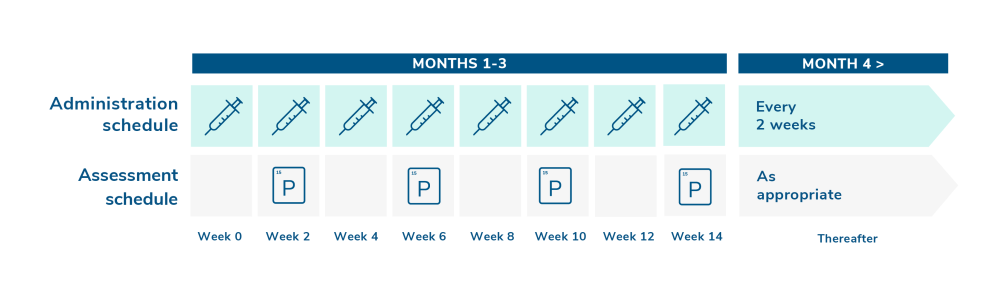
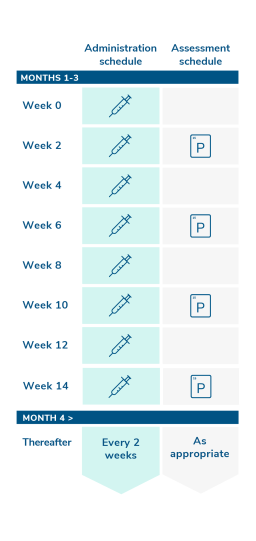
CRYSVITA is administered once EVERY 2 WEEKS.1

After initiation of treatment with CRYSVITA, assess fasting serum phosphorus on a monthly basis, measured 2 weeks post-dose, for the first 3 months of treatment, and thereafter as appropriate.1

Monitor and adjust dose based on serum phosphorus levels1

If serum phosphorus is within the reference range for age, continue treatment with the same dose. Follow the Dose adjustment schedule below to maintain serum phosphorus within the reference range for age.

Dose adjustments

Guidelines for pediatric dose adjustments with CRYSVITA

A calendar date with a star in the middle

When making dosage adjustments for your patients, take note of the following1:

  • Reassess fasting serum phosphorus level 4 weeks after dose adjustment
  • Do not adjust CRYSVITA more frequently than every 4 weeks

If fasting serum phosphorus is below the reference range for age1:

  • The dose should be titrated in accordance with the table below up to the maximum dose of 2 mg/kg every 2 weeks. The maximum dose should not exceed 180 mg
TIO pediatric dose schedule for stepwise dose increase for patients 10 kg1
Body weight (kg) Starting dose (mg) First dose increase to (mg) Second dose increase to (mg) Third dose* increase to (mg)
10-145101520
15-185102025
19-3110202535
32-4310304050
44-5620405070
57-6820507090
69-80306080100
81-933070100120
94-1054080110140
≥1064090130160

TIO pediatric dose schedule for stepwise dose increase for patients 10 kg1

Body weight (kg)
10-14
Starting dose (mg)
5
First dose increase to (mg)
10
Second dose increase to (mg)
15
Third dose* increase to (mg)
20
15-18
Starting dose (mg)
5
First dose increase to (mg)
10
Second dose increase to (mg)
20
Third dose* increase to (mg)
25
19-31
Starting dose (mg)
10
First dose increase to (mg)
20
Second dose increase to (mg)
25
Third dose* increase to (mg)
30
32-43
Starting dose (mg)
10
First dose increase to (mg)
30
Second dose increase to (mg)
40
Third dose* increase to (mg)
50
44-56
Starting dose (mg)
20
First dose increase to (mg)
40
Second dose increase to (mg)
50
Third dose* increase to (mg)
70
57-68
Starting dose (mg)
20
First dose increase to (mg)
50
Second dose increase to (mg)
70
Third dose* increase to (mg)
90
69-80
Starting dose (mg)
30
First dose increase to (mg)
60
Second dose increase to (mg)
80
Third dose* increase to (mg)
100
81-93
Starting dose (mg)
30
First dose increase to (mg)
70
Second dose increase to (mg)
100
Third dose* increase to (mg)
120
94-105
Starting dose (mg)
40
First dose increase to (mg)
80
Second dose increase to (mg)
110
Third dose* increase to (mg)
140
≥106
Starting dose (mg)
40
First dose increase to (mg)
90
Second dose increase to (mg)
130
Third dose* increase to (mg)
160

*The table shows a dose increase up to 1.5 mg/kg. Further dose increases to a maximum of 2 mg/kg, not to exceed 180 mg, administered every 2 weeks should be calculated by the physician.1

Have questions about biochemical reference ranges?

Check with the testing laboratory for specific definitions, parameters, and normal ranges. Your CRYSVITA representative can also provide resources on biochemical markers in TIO, including serum phosphorus.

Contact a rep

If fasting serum phosphorus is above the reference range for age1:

  • Withhold the next dose and reassess the serum phosphorus level in 4 weeks
  • The patient must have serum phosphorus below the reference range for age to reinitiate CRYSVITA
  • Once serum phosphorus is below the reference range for age, treatment may be restarted at approximately half the initial starting dose, up to a maximum dose of 180 mg administered every 2 weeks for pediatrics
  • After a dose decrease, reassess serum phosphorus level 4 weeks after the dose adjustment
  • If the level remains below the reference range for age after the reinitiation dose, the dose can be adjusted per the table in the “Increasing CRYSVITA dosing” section above

Have questions about biochemical reference ranges?

Your CRYSVITA representative can provide resources on biochemical markers in TIO, including serum phosphorus.

Contact a rep

If a patient undergoes treatment of the underlying tumor (ie, surgical excision or radiation therapy)1:

  • CRYSVITA treatment should be interrupted and serum phosphorus reassessed after treatment has been completed
  • CRYSVITA dose should be restarted at the patient’s initiation dose if serum phosphorus remains below the lower limit of normal
  • Follow dose adjustment per the table in the “Increasing CRYSVITA dosing” section above to maintain fasting serum phosphorus within the reference range for age
Additional considerations

Additional considerations for dosage and administration of CRYSVITA

When treating your patients with CRYSVITA, consider the following1:

  • CRYSVITA should be administered via subcutaneous injection only
  • Visually inspect CRYSVITA for particulate matter and discoloration prior to administration. Do not use if the solution is discolored or cloudy or if the solution contains any particles or foreign particulate matter
  • If a patient misses a dose, have the patient resume CRYSVITA as soon as possible at the prescribed dose. To avoid missed doses, treatments may be administered 3 days on either side of the scheduled treatment date
  • Monitor serum calcium and parathyroid hormone levels in patients at high risk for hypercalcemia before and during treatment
Kyowa Kirin

Connect with Kyowa Kirin Cares to help your pediatric patients prescribed CRYSVITA with their treatment journey

A woman smiling at her desk with a headset on

Actor portrayal

Indication

CRYSVITA® (burosumab-twza) is a fibroblast growth factor 23 (FGF23) blocking antibody indicated for the treatment of FGF23-related hypophosphatemia in tumor-induced osteomalacia (TIO) associated with phosphaturic mesenchymal tumors that cannot be curatively resected or localized in adult and pediatric patients 2 years of age and older.


Indication

CRYSVITA® (burosumab-twza) is a fibroblast growth factor 23 (FGF23) blocking antibody indicated for the treatment of FGF23-related hypophosphatemia in tumor-induced osteomalacia (TIO) associated with phosphaturic mesenchymal tumors that cannot be curatively resected or localized in adult and pediatric patients 2 years of age and older.

Important Safety Information

CONTRAINDICATIONS

CRYSVITA is contraindicated:

  • In concomitant use with oral phosphate and/or active vitamin D analogs (e.g., calcitriol, paricalcitol, doxercalciferol, calcifediol) due to the risk of hyperphosphatemia.
  • When serum phosphorus is within or above the normal range for age.
  • In patients with severe renal impairment or end stage renal disease because these conditions are associated with abnormal mineral metabolism.

WARNINGS AND PRECAUTIONS

Hypersensitivity

  • Hypersensitivity reactions (e.g., rash, urticaria) have been reported in patients with CRYSVITA. Discontinue CRYSVITA if serious hypersensitivity reactions occur and initiate appropriate medical treatment.

Hyperphosphatemia and Risk of Nephrocalcinosis

  • Increases in serum phosphorus to above the upper limit of normal may be associated with an increased risk of nephrocalcinosis. For patients already taking CRYSVITA, dose interruption and/or dose reduction may be required based on a patient’s serum phosphorus levels.
  • Patients who undergo treatment of the underlying tumor should have dosing interrupted and adjusted to prevent hyperphosphatemia.

Hypercalcemia

  • Increases in serum calcium have been reported in patients treated with CRYSVITA. Patients with risk factors such as pre-existing hyperparathyroidism, prolonged immobilization, dehydration, hypervitaminosis D, or renal impairment, are at higher risk of hypercalcemia. Monitor these patients for serum calcium and parathyroid hormone levels before and during CRYSVITA treatment for moderate to severe hypercalcemia. In patients with moderate to severe hypercalcemia, CRYSVITA should not be administered until hypercalcemia is adequately managed.

Injection Site Reactions

  • Administration of CRYSVITA may result in local injection site reactions. Discontinue CRYSVITA if severe injection site reactions occur and administer appropriate medical treatment.

ADVERSE REACTIONS

Adult Patients

  • Adverse reactions reported in more than 10% of CRYSVITA-treated adult TIO patients in two studies are: tooth abscess (19%), muscle spasms (19%), dizziness (15%), constipation (15%), injection site reaction (15%), rash (15%), and headache (11%).

USE IN SPECIFIC POPULATIONS

  • There are no available data on CRYSVITA use in pregnant women to inform a drug-associated risk of adverse developmental outcomes. Serum phosphorus levels should be monitored throughout pregnancy. Report pregnancies to the Kyowa Kirin, Inc. Adverse Event reporting line at 1-844-768-3544.
  • There is no information regarding the presence of CRYSVITA in human milk or the effects of CRYSVITA on milk production or the breastfed infant. Therefore, the developmental and health benefits of breastfeeding should be considered along with the mother’s clinical need for CRYSVITA and any potential adverse effects on the breastfed infant from CRYSVITA or from the underlying maternal condition.

PATIENT COUNSELING INFORMATION

  • Advise patients not to use any oral phosphate and/or active vitamin D analog products.
  • Instruct patients to contact their physician if hypersensitivity reactions, injection site reactions, and restless legs syndrome induction or worsening of symptoms occur.

You may report side effects to the FDA at (800) FDA-1088 or www.fda.gov/
medwatch
. You may also report side effects to Kyowa Kirin, Inc. at 1-844-768-3544.

For important risk and use information, please see the full Prescribing Information for CRYSVITA.

References:

  • 1. CRYSVITA (burosumab-twza). US Prescribing Information. Kyowa Kirin, Inc.; April 2026.
Indication

CRYSVITA® (burosumab-twza) is a fibroblast growth factor 23 (FGF23) blocking antibody indicated for the treatment of FGF23-related hypophosphatemia in tumor-induced osteomalacia (TIO) associated with phosphaturic mesenchymal tumors that cannot be curatively resected or localized in adult and pediatric patients 2 years of age and older.

Important Safety Information

CONTRAINDICATIONS

CRYSVITA is contraindicated:

  • In concomitant use with oral phosphate and/or active vitamin D analogs (e.g., calcitriol, paricalcitol, doxercalciferol, calcifediol) due to the risk of hyperphosphatemia.
  • When serum phosphorus is within or above the normal range for age.
  • In patients with severe renal impairment or end stage renal disease because these conditions are associated with abnormal mineral metabolism.

WARNINGS AND PRECAUTIONS

Hypersensitivity

  • Hypersensitivity reactions (e.g., rash, urticaria) have been reported in patients with CRYSVITA. Discontinue CRYSVITA if serious hypersensitivity reactions occur and initiate appropriate medical treatment.

Hyperphosphatemia and Risk of Nephrocalcinosis

  • Increases in serum phosphorus to above the upper limit of normal may be associated with an increased risk of nephrocalcinosis. For patients already taking CRYSVITA, dose interruption and/or dose reduction may be required based on a patient’s serum phosphorus levels.
  • Patients who undergo treatment of the underlying tumor should have dosing interrupted and adjusted to prevent hyperphosphatemia.

Hypercalcemia

  • Increases in serum calcium have been reported in patients treated with CRYSVITA. Patients with risk factors such as pre-existing hyperparathyroidism, prolonged immobilization, dehydration, hypervitaminosis D, or renal impairment, are at higher risk of hypercalcemia. Monitor these patients for serum calcium and parathyroid hormone levels before and during CRYSVITA treatment for moderate to severe hypercalcemia. In patients with moderate to severe hypercalcemia, CRYSVITA should not be administered until hypercalcemia is adequately managed.

Injection Site Reactions

  • Administration of CRYSVITA may result in local injection site reactions. Discontinue CRYSVITA if severe injection site reactions occur and administer appropriate medical treatment.

ADVERSE REACTIONS

Adult Patients

  • Adverse reactions reported in more than 10% of CRYSVITA-treated adult TIO patients in two studies are: tooth abscess (19%), muscle spasms (19%), dizziness (15%), constipation (15%), injection site reaction (15%), rash (15%), and headache (11%).

USE IN SPECIFIC POPULATIONS

  • There are no available data on CRYSVITA use in pregnant women to inform a drug-associated risk of adverse developmental outcomes. Serum phosphorus levels should be monitored throughout pregnancy. Report pregnancies to the Kyowa Kirin, Inc. Adverse Event reporting line at 1-844-768-3544.
  • There is no information regarding the presence of CRYSVITA in human milk or the effects of CRYSVITA on milk production or the breastfed infant. Therefore, the developmental and health benefits of breastfeeding should be considered along with the mother’s clinical need for CRYSVITA and any potential adverse effects on the breastfed infant from CRYSVITA or from the underlying maternal condition.

PATIENT COUNSELING INFORMATION

  • Advise patients not to use any oral phosphate and/or active vitamin D analog products.
  • Instruct patients to contact their physician if hypersensitivity reactions, injection site reactions, and restless legs syndrome induction or worsening of symptoms occur.

You may report side effects to the FDA at (800) FDA-1088 or www.fda.gov/
medwatch
. You may also report side effects to Kyowa Kirin, Inc. at 1-844-768-3544.

For important risk and use information, please see the full Prescribing Information for CRYSVITA.

References:

  • 1. CRYSVITA (burosumab-twza). US Prescribing Information. Kyowa Kirin, Inc.; April 2026.

Back to top

COMM-US-CRY-0999 June 2026